
-
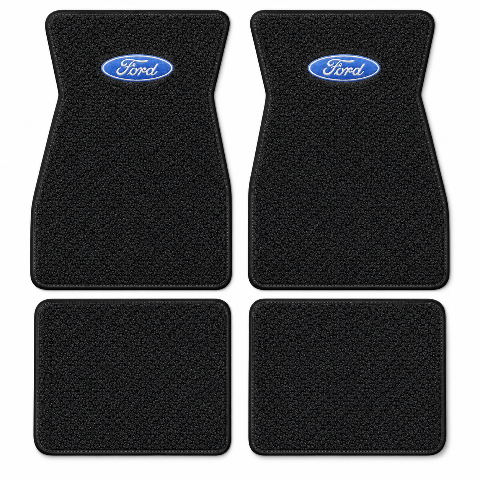
1979-1993 Ford Mustang Cutpile Floor Mats with Embroidered Logo Choices - 4-Piece
Regular price From $176.93Regular priceUnit price per$221.17Sale price From $176.93Sale -
1974-1978 Ford Mustang II Cutpile Floor Mats with Embroidered Logo Choices - 4-Piece
Regular price From $176.93Regular priceUnit price per$221.17Sale price From $176.93Sale -
1969-1973 Ford Mustang Nylon Floor Mats with Embroidered Logo Choices - 4-Piece
Regular price From $166.13Regular priceUnit price per$207.67Sale price From $166.13Sale -
1964-1968 Ford Mustang Loop Floor Mats with Embroidered Logo Choices - 4-Piece
Regular price From $176.93Regular priceUnit price per$221.17Sale price From $176.93Sale


Mustang Carpet Floor Mats: Classic, Fox Body, and Later Applications
Floor mats are a small part of a Mustang interior with a large visual presence. They sit beside the pedals, frame the front footwells, and can tie the floor to the seats and lower trim. An embroidered design adds another choice: understated Ford identity, a Running Pony accent, or a treatment that suits the owner’s preferred Mustang character. The strongest result starts with the right application, then builds the appearance around it.
The ACC catalog separates Mustang mat products by year range, material, design, and coverage. At Radiant Speed Works, compare those details with the actual vehicle before choosing a finish. This guide explains how classic Loop and Nylon applications differ from Fox Body Cutpile sets and later listings, and how to keep front-only coverage separate from a larger package. Use the individual product to confirm the selections available for your order.
Three details to establish before choosing embroidery
First, identify the exact model year. A familiar Mustang generation name is useful for browsing, but the years on the product determine the stated application. The catalog contains distinct ranges rather than a single pattern for every Mustang. Keep the year range attached to the product when you compare colors or send a listing to someone helping with the project.
Second, decide which positions need coverage. Many catalog examples are four-piece passenger-floor sets, while a later application is explicitly described as a front pair. A higher piece count does not make a package more appropriate if it covers positions you are not replacing. Establish the job before comparing the decorative options.
Third, note changes inside the car. An aftermarket console, different seats, altered floor covering, or a repurposed rear area can create questions that the original model-year description does not explain. Provide those details when seeking application help. Selecting a mat for the vehicle as it actually sits is more useful than assuming every interior bearing the same Mustang badge follows the same layout.
1964–1968 Mustang Loop floor mats
The classic 1964–1968 application is identified as ACC base number 19503, a four-piece Loop mat set. That material and coverage description gives a concrete starting point for early Mustang carpet floor mats. Compare it with the product offered on RSW and confirm the actual year range and selections before deciding on an embroidered finish.
The source specification lists the driver and passenger mats at 25 3/4 by 16 3/4 inches and the rear pieces at 13 1/2 by 15 7/8 inches. Measurements can support a question about coverage, but they do not describe every contour or interaction with a changed console. Use the stated application first and dimensions as supporting information rather than treating a rectangular measurement as complete fitment proof.
The early product information also notes a particular logo position toward the top of the mat. Read the actual RSW listing’s placement and image notes when selecting the design. A styled illustration can communicate the overall appearance without establishing an exact production layout. If that detail is central to the purchase, confirm it before ordering rather than relying on a small gallery image.
Choosing Running Pony or Ford embroidery for a classic Mustang
The catalog contains early Mustang examples with silver and gold Running Pony designs and Ford-in-oval artwork. These names describe different visual choices. Compare the exact treatment offered on the product instead of assuming every Running Pony image uses the same colors or appearance. A finish that works well with one cabin palette may create a different effect beside another.
For an interior with bright accents or patterned upholstery, a quieter mat-and-logo combination can provide a useful visual anchor. In a simpler cabin, a more visible emblem can become an intentional finishing detail. Decide how much attention you want the mats to attract, then review that choice with the seats, console, and floor color together.
Use the customization supported by the actual listing. The wider manufacturer catalog can contain thread information that is not offered on every RSW configuration. A separate order note should not be expected to create an unsupported color combination. Choose the named artwork and carpet finish shown for the product, or ask about a missing choice before placing the order.
Cobra and Shelby-inspired design choices
Several catalog examples identify Cobra-related treatments, including a snake, script, or a circle design described with Shelby Cobra wording. Those are distinct artwork descriptions, and they should be compared as such. The emblem selected for the mat is an appearance choice; it does not establish the vehicle application or change the floor pattern supplied by the product.
If the car has a particular restoration theme, compare the named artwork with the rest of the interior rather than choosing from a logo alone. Shape, lettering, and contrast can affect the balance of the cabin. Keep the exact design description with the product reference so a similarly named treatment is not substituted during comparison or ordering.
A decorative emblem also should not be treated as documentation of the car’s original equipment or identity. Select the mat for the stated application and the appearance you want. That separation keeps the purchase straightforward: the vehicle details establish fitment, and the product’s supported design menu establishes the finish.
1969–1973 Mustang Nylon mat applications
For 1969–1973 Mustangs, the catalog identifies ACC base application 8880 as a four-piece Nylon floor-mat set. That differs from the Loop description in the earlier classic range. Compare material information and detail photographs on the specific listing instead of assuming that all classic Mustang carpet mats use the same texture.
Material and color work together. A similarly named shade can look different across carpet families, and old flooring may have changed through wear and fading. Decide whether the mats should blend closely with retained surfaces or form a deliberate accent. When a precise match matters, ask about suitable physical references rather than expecting a screen image to settle the question.
This range includes catalog design examples such as Mach 1, Mustang script, Running Pony, and Ford-related treatments. Confirm which are offered by the actual RSW product. A design shown in a related category or on another pattern should not be assumed available for every application. Keep the selected years, material, coverage, and artwork together as one configuration.
Mach 1 lettering and Mustang script as finishing details
Named lettering can give the mat a different character from a pictorial emblem. The catalog’s Mach 1 and Mustang-script descriptions offer useful examples of that choice. Compare the full artwork name, the treatment shown, and any product notes. A shared word in two design names does not establish identical lettering or production appearance.
For a restoration, decide how the mats relate to the existing cabin rather than trying to match every visible badge. A restrained repeated accent can feel coordinated, while too many competing treatments can draw attention away from the seats and trim you want to feature. The mat should support the overall interior plan, whether the goal is subtlety or a stronger personal statement.
Before ordering, review the actual available selection combination. A gallery may show several examples, while the product configuration defines what can be purchased. Confirm both carpet and artwork together, including any displayed change in price. That provides a clearer expectation than choosing one feature from an image and another from a different listing.
1979–1993 Fox Body Mustang Cutpile mats
The Fox Body catalog application is identified as ACC base number 8886, a four-piece Cutpile set for 1979–1993 Mustangs. Use the complete range and coverage when searching for Fox Body carpet floor mats. A broad Mustang result can mix early classics, later applications, and products serving different positions in the interior.
Check the condition of the underlying floor before treating new mats as the whole project. If the installed carpet is damp, badly fitted, torn, or missing, inspect that condition separately. Removable mats improve a surface and provide their own coverage; they do not replace a passenger-compartment carpet kit or repair the reason the floor covering has deteriorated.
For a driver that retains sound carpet, a coordinated set can be a focused update. Consider the shade against the seats and lower trim under daylight as well as cabin lighting. A newer carpet face may look different beside older material even with a related color name. Choose whether that contrast suits the car before committing to the finish.
Fox Body 5.0, GT, and Cobra-related artwork
The catalog includes Fox Body examples with 5.0, GT, Running Pony, Mustang script, and several Cobra-related descriptions. Some artwork names specify border or lettering treatments. Read those details when comparing the designs, especially if the mat is intended to coordinate with another accent in the cabin. A logo name by itself may leave out the feature that matters most visually.
Keep decoration separate from compatibility. A preferred 5.0 or GT treatment appearing on a different year range does not make that mat suitable for the Fox Body application. Begin with the right pattern, then choose from the supported finish options. This avoids letting a familiar emblem distract from the actual product’s stated years and coverage.
If you are buying for a modified car, add the interior changes to the application discussion even when the external model identity is clear. Different seats or a custom console can create practical questions that the emblem does not answer. A clear vehicle note and product reference make those questions easier to resolve before ordering.
1994–2004 Mustang mat listings
Catalog entries for 1994–2004 Mustangs identify four-piece sets with several named embroidered treatments. Use that year range directly when comparing later Mustang mats. The catalog’s generation wording can help organize the search, but the individual application and package description still need to match the vehicle and positions you intend to cover.
Check the material and construction in the actual listing rather than transferring the Cutpile description from an earlier application without review. A collection guide can explain the choices, while the product specification establishes what is supplied. The same applies to retention details and any configuration notes that are important for the car.
Named examples include Running Pony, Ford-in-oval, Cobra, Mustang script, GT-related, and Bullitt treatments. Confirm the exact design offered on the RSW product. A themed emblem can help personalize the cabin, but it does not make every set with that artwork interchangeable. Keep the vehicle range and the selected pattern at the center of the comparison.
2005–2009 and 2010–2014 Mustang coverage
Later catalog examples include separately described 2005–2009 and 2010–2014 four-piece sets with Bullitt embroidery. The existence of separate ranges is a reason to preserve the product’s stated years rather than treating a broad S197 label as one universal mat application. Read the actual coverage and specifications before choosing the finish.
For 2010–2014, the catalog also identifies a front-only two-piece product. That is a useful distinction for an owner replacing just the driver and passenger pieces. Compare front coverage with the condition of the rear mats and decide what belongs in the project. A front pair is a different package, not necessarily an incomplete version of the set you need.
If you want coordinated front-and-rear appearance, review the complete package offered for the actual year range. If a focused front refresh is the goal, confirm what the front pair supplies. The decision should be driven by coverage and the product specification first, then by the appearance of the selected carpet and design.
Reading the 2015–2026 catalog wording carefully
One catalog entry uses a broad 2015–2026 Mustang description with Bullitt embroidery and a four-piece count. Treat that as the wording of a specific product requiring its own application review. Do not turn a broad title into a blanket claim about every later Mustang body, interior arrangement, or retention configuration. Confirm the exact listing against the vehicle before purchase.
When a range crosses a major change in the vehicle family or seems unusually broad, gather the model year and relevant interior details and ask for a product-specific check. That is more useful than choosing on the strength of the embroidered theme. The mat needs to suit the actual floor and supported retention arrangement, regardless of the artwork selected.
The same principle applies to any uncertain catalog wording. A category guide should help you identify what needs confirmation, not smooth over an unresolved distinction. Establish the application before ordering and keep that confirmation with the product reference. Then select the supported finish for a purchase with clear expectations.
Four-piece mats, front pairs, and replacement carpet
Piece count describes the removable mat package, not all flooring in the vehicle. A four-piece set can provide the passenger positions stated by its listing; a front pair covers the positions named by that product. Neither automatically supplies installed passenger carpet, trunk material, insulation, or other interior sections. Plan those areas independently when the project extends beyond mats.
If the existing carpet needs replacement, settle that material and color direction before choosing the mats. The two purchases can be coordinated, but they have different application checks. A floor-mat pattern does not establish the correct replacement-carpet package, and the presence of an ACC carpet kit does not guarantee every mat choice is offered in an identical finish.
For a gradual refresh, list what will be replaced now and what will remain. That helps determine whether the mats should coordinate with the current cabin or a planned future finish. It also reduces the chance of ordering around an interior combination that is only temporary. A clear project scope can make even a small purchase feel more deliberate.
Color references and embroidered-image expectations
Choose carpet color in the context of the vehicle. Look at seats, lower dash, console, and retained flooring together. Decide whether you want the mats to disappear into that palette or create a defined accent. Then compare the logo treatment with the carpet shade rather than selecting the two independently from unrelated pictures.
Photography and screen settings can change apparent color, and carpet fibers can look different as light falls across them. Ask about suitable references when matching an existing interior closely. Record the material and color identification with the product choice. A named shade without its material context may not provide enough information for a later comparison.
Generated or styled illustrations communicate an overall idea, but the product notes control expectations for production color, logo size and position, and edging. Review those notes alongside the gallery. If one visual detail determines your purchase, confirm it directly. An informed design choice is more useful than treating every small feature in an illustration as an exact production specification.
Positioning and caring for Mustang carpet mats
Remove old removable mats and clear the underlying floor before fitting the new set. Identify each piece’s intended position and follow the supplied instructions. Check the driver’s footwell particularly carefully: the mat should lie properly, use the specified retention arrangement where applicable, and remain clear of normal pedal operation. Do not stack a new driver’s mat over another removable piece.
If the mat sits unexpectedly, pause and review the application, orientation, and any interior changes. Missing or altered hardware should be addressed rather than assumed irrelevant. Avoid trimming a piece while a fitment question remains unresolved. Keeping it in its supplied state makes the application easier to assess and protects the planning already invested in the order.
For cleaning, follow guidance appropriate to the supplied carpet and embroidery. Remove loose grit regularly, check cleaner compatibility, and allow the mats to dry fully before returning them to the cabin. Recheck positioning and driver clearance after cleaning or moving the pieces. Routine care helps preserve the finished appearance while keeping the floor beneath easier to inspect.
Keep the selected configuration with your interior plan
Save the product reference, stated years, supplied coverage, and chosen finish together before ordering. Include the exact artwork name where several similar designs are offered. This is particularly useful when comparing silver and gold Running Pony treatments, different GT borders, or Cobra-related lettering. A saved image alone may omit the application detail that separates two otherwise similar products.
If the mats are a gift, confirm the vehicle year and relevant interior details with someone who knows the car. If they are part of a longer restoration, note whether the selected color coordinates with the current cabin or the planned finish. Review the configuration again when the set arrives, before putting it into use. The purpose is simple: the product you receive should match one clearly understood selection, with application, coverage, carpet, and artwork all working together.
Mustang floor-mat questions
Can I choose a logo before choosing the mat application?
You can use artwork to plan the appearance, but establish the correct year range and coverage before ordering. A design offered on another Mustang application does not make its pattern compatible with your car. Select the product that fits the stated vehicle and then review its supported finishes.
Do all classic Mustang sets use the same carpet material?
No single material should be assumed across the catalog. The examples above include Loop for the 1964–1968 application and Nylon for 1969–1973, while later products have their own specifications. Read the material on the actual RSW listing and compare the available references before selecting a color.
Can I order custom thread colors in a note?
Use the customization offered by the product. The wider catalog can describe choices not supported on every listing, and some named artwork uses its standard design colors. If a desired configuration is missing, ask about it before ordering. A separate note should not be assumed to change the product specification.
What information helps with application questions?
Provide the exact year, product reference, coverage needed, and relevant changes to seats, console, floor, or retention hardware. Photographs of the actual footwells can clarify the question. With the pattern established, the carpet shade and embroidery can become the finishing details that make the Mustang interior feel complete.